Photo: tucaiuly / Pixabay
Inside Cellar 9: The Basement That Rebuilt Rotterdam’s After-Hours
A 400-capacity concrete box under a former tram depot has become the city’s most argued-over dancefloor. Its secret is a sound system tuned for silence between the drops.
The queue for Cellar 9 starts forming at 1:40 a.m., which is early for Rotterdam and absurdly early for a room that doesn’t properly wake up until five. By the time the steel door opens, forty people are standing in the drizzle on Gedempte Havenstraat, not talking, phones already in the stickered pouches the door team hands out like communion wafers.
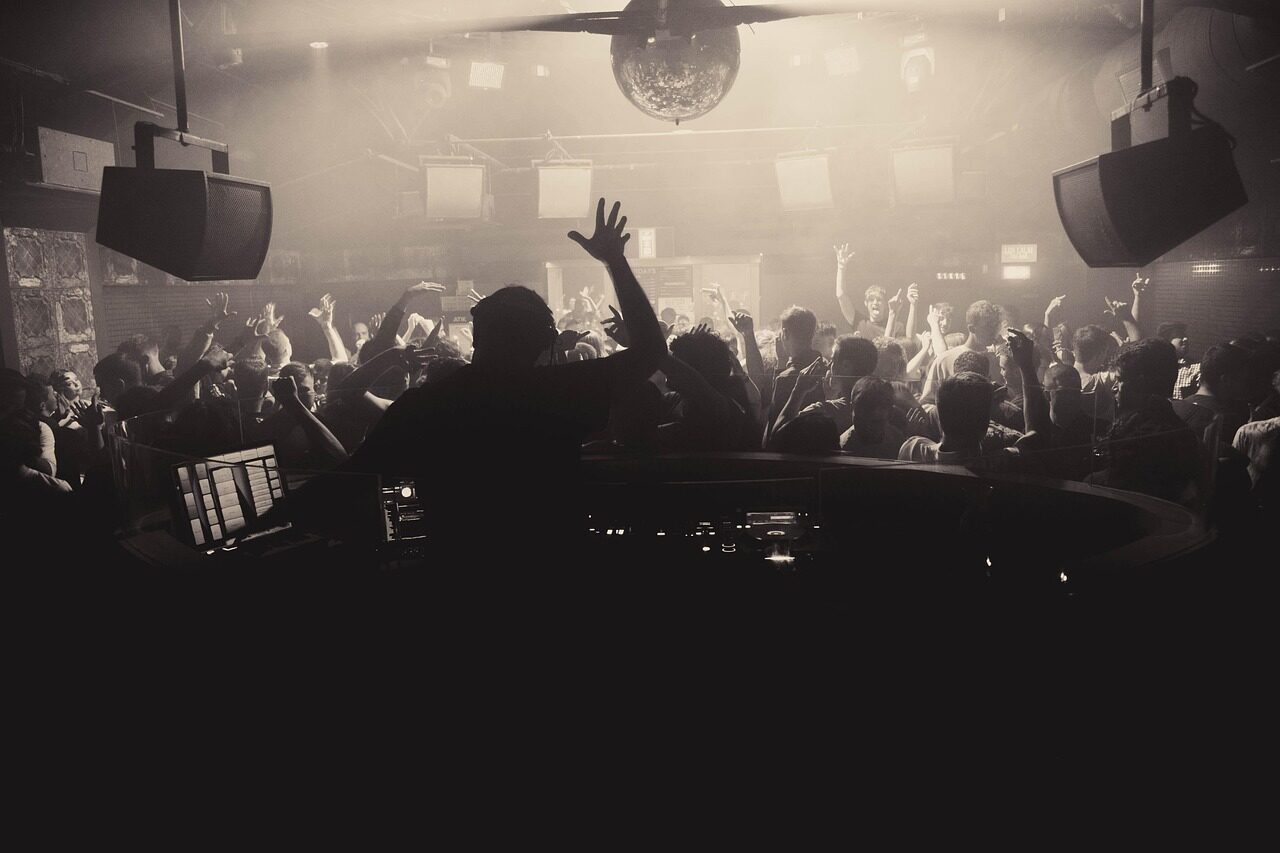
Inside, the ceiling is 2.4 metres at its lowest. The walls are bare poured concrete, the floor a dark rubberised screed that the owners say cost more than the sound system. There are no mirrors, no LED wall, no VIP table. There is a booth at the far end, a bar at the near end, and between them a rectangle of floor that holds roughly 400 people if nobody is particularly attached to their personal space.
A room built around subtraction
Cellar 9 opened in March 2024 in the undercroft of a decommissioned tram depot, and its founders are quick to say they never meant to build a destination. “We wanted somewhere to play records at the volume they were mastered for,” says Daan Ketelaar, who co-runs the venue with the lighting designer Marit Zandstra and the sound engineer Pieter Vanhove. “The city kept closing places for noise. We went underground, literally.”
The tram depot’s foundations sit in clay and sheet piling, and Vanhove spent eight months measuring how little of the bass escaped upward. His solution was a floated floor on 1,100 neoprene isolators and a second inner ceiling hung on springs. The result, he claims, is a 41 dB drop between the dancefloor and the pavement above. Neighbours in the apartment block overhead have reportedly never complained.
The system itself is a four-point array of custom horn-loaded tops from a small Danish manufacturer, Torkildsen Audio, with eight double-18-inch subs arranged in a cardioid cluster beneath the booth. Total output is modest by festival standards, about 28 kW. But it is tuned flat to 28 Hz and, crucially, the room has almost no reverb.
“When the kick stops, you should hear the room stop. That half-second of nothing is the best part of the night.” — Pieter Vanhove
The dance of dry acoustics
That dryness changes how DJs play. Several residents describe adapting their sets to the room: shorter blends, more deliberate breakdowns, less reliance on reverb-drenched pads to cover transitions. The booth is sunk 30 centimetres below the floor so the DJ stands at crowd level, and monitors are deliberately weak.
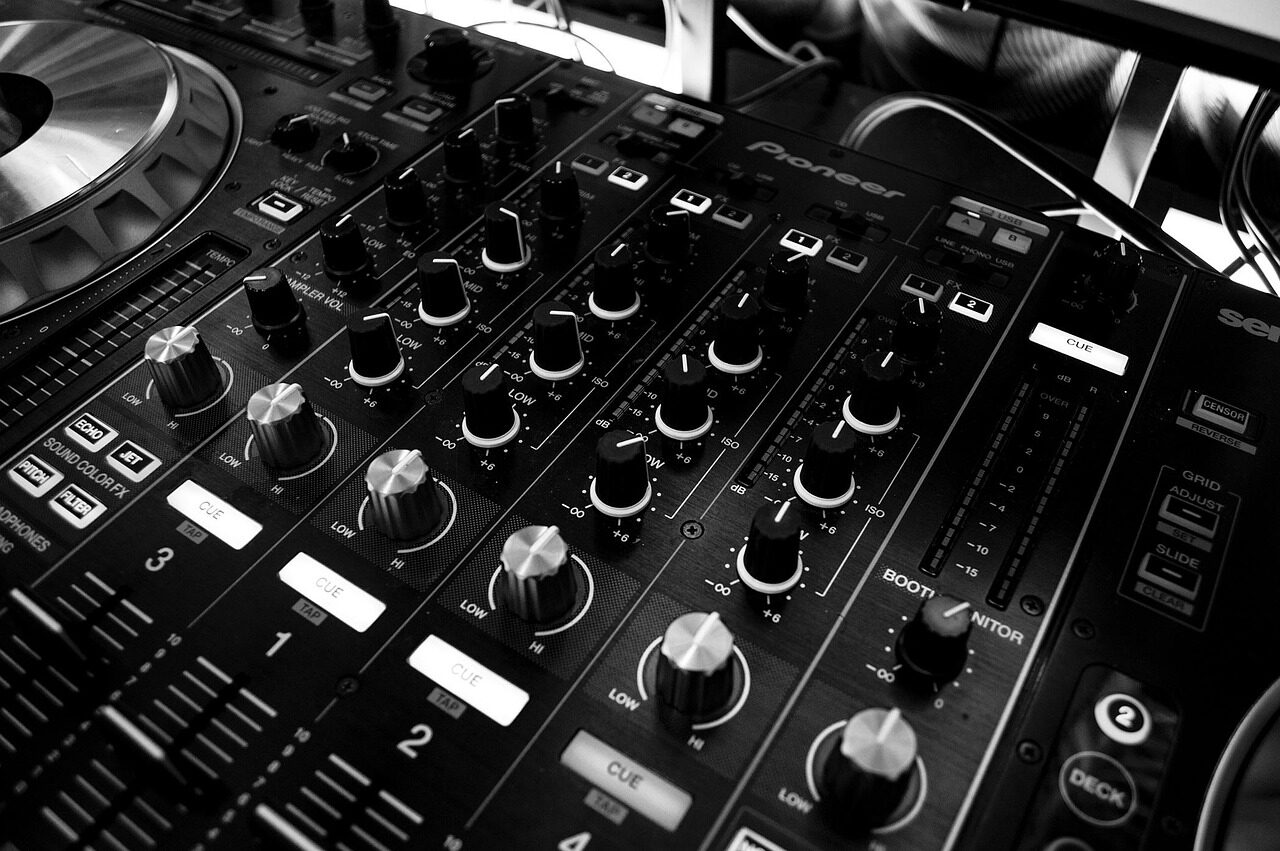
THE DROP · From the crate: Six Months With the Raknes DM-4: A Mixer That Argues With You · Photo: Pexels / Pixabay
“You can’t hide here,” says Ilse Boerhaave, a resident who plays a lean, percussive strain of techno at 132 BPM. “If a mix is sloppy, 400 people hear it at the same time. It made me a better DJ in about three months.”
The booking policy reinforces this. Cellar 9 runs a rotating roster of fourteen residents, each playing at least once a month, with headliners limited to one Saturday in four. The door policy is similarly spare: no guestlist beyond staff, tickets released at €18 on the Tuesday before, and a hard cap enforced by a click counter.
What the neighbourhood thinks
Not everyone is charmed. Rotterdam’s nightlife has a long tradition of loud, democratic rooms, and some veterans see Cellar 9 as austere to the point of preciousness. The phone pouches, in particular, have generated a small cottage industry of grumbling on local forums.

From the crate: The Last Field: Can the Mid-Sized Festival Survive 2027? · Photo: OrnaW / Pixabay
“It feels like a seminar,” says Joost Verhaag, who ran a warehouse night in the Merwe-Vierhavens district through the 2010s. “A very good seminar. But a party needs a bit of chaos.”
The founders shrug. Ketelaar points to retention figures: of the 1,900 people on the venue’s mailing list, about 60 percent have attended four or more times. Average stay is a little over five hours, long by Dutch standards, where closing times are typically soft by 6 a.m.
Why it matters beyond the Maas
The model is now being copied. A venue in Ghent and another in Leipzig have both approached Vanhove for acoustic consulting, and a Lisbon collective has taken the phone-pouch policy wholesale. What travels isn’t the concrete; it’s the argument that a club’s most valuable asset is attention.
On a recent Saturday, at 5:15 a.m., Boerhaave dropped the final bar of a long, grinding groove and let the room go quiet. For almost two seconds, nobody moved. Then 400 people exhaled, and the kick came back in, and the floor — floated, isolated, entirely sealed off from the sleeping city above — started to shake.
Two more hours remained. Nobody looked at the door.
Freja covers club culture and nightlife policy, with a background in local radio and city-council reporting. She is based in Stockholm.
Every track by Freja →

Conversation (…)