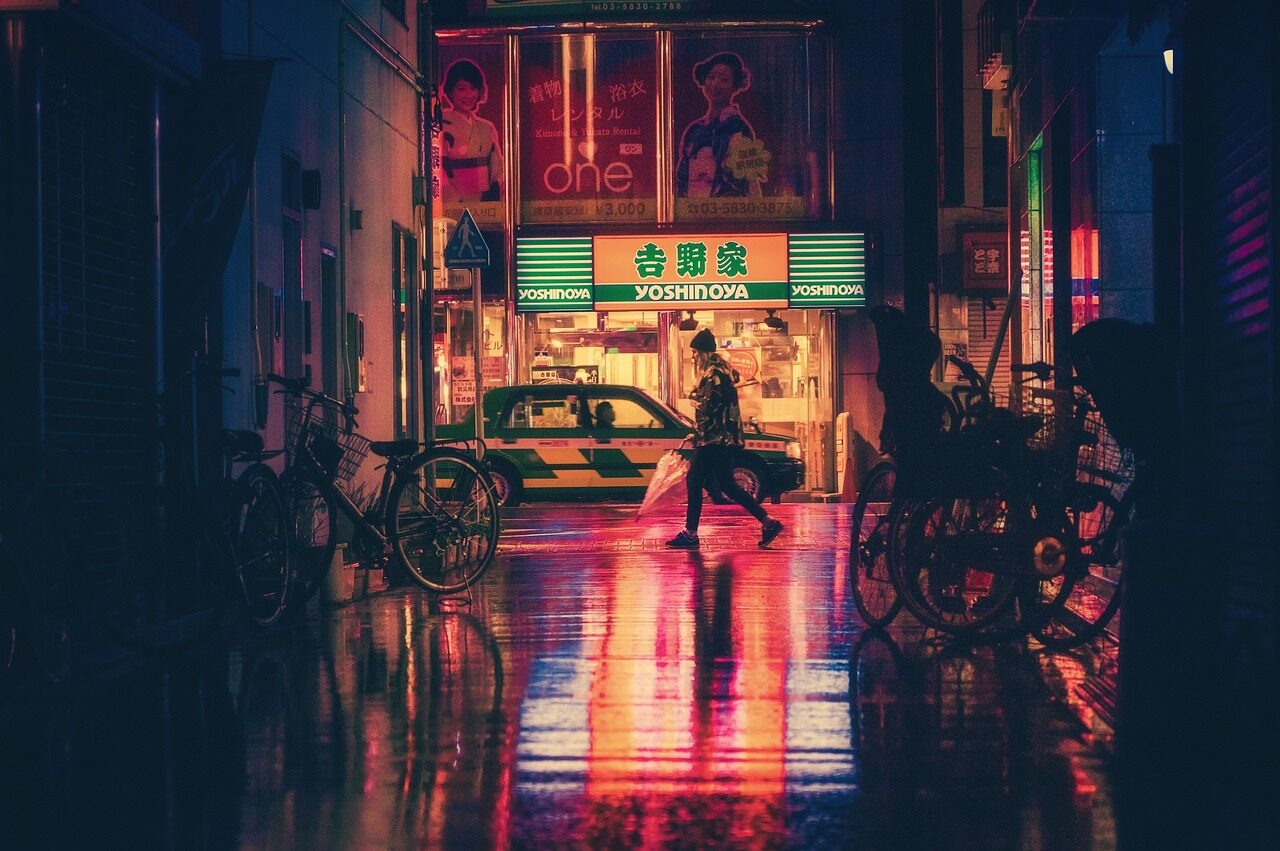
Photo: MasashiWakui / Pixabay
Osaka After Dark: The Listening Bars Quietly Rewiring Japan’s Dance Culture
In the narrow upstairs rooms of Osaka’s Nishinari and Umeda districts, a generation of selectors is playing dance music at conversation volume, on valve amplifiers, to rooms of 14 people. It is stranger and more influential than it sounds.
To reach Hollow Dial, you climb four flights of a stairwell that smells of cedar and old fryer oil, past a laundry and a dentist’s, and push a door with no sign. Inside, a room about the size of a London lift lobby holds a counter, 14 stools and two enormous cabinet speakers with paper cones the colour of tea. A man in a grey cardigan lowers a needle on a 12-inch that, in a club, would be a peak-hour weapon. Here, it is played at roughly the volume of a quiet dinner.
This is the Osaka listening bar, and it is changing what a dance record is for.
A culture of small rooms
Japan’s listening bar tradition, the kissa cafés where patrons sit silently with jazz records, goes back to the 1950s. What’s new is the repertoire. Over the past six years, a loose group of Osaka owners has started to play house, electro and slow, tender techno through the same kind of audiophile systems. Local counts vary, but the bar owner Haruto Maebashi, who keeps an informal list, puts the number of such rooms in the city at 63, up from about 15 in 2019.
Hollow Dial is among the more obsessive. Its owner, Sumire Takagawa, spent nearly ¥4.2 million, around £21,000, on a restored valve amplifier and a pair of 1970s horn-loaded speakers. ‘In a club, the bass is a weather system,’ she says, through an interpreter. ‘Here you can follow one line of it. You hear the person who made it.’
Why it works here
The explanation is partly economic. Osaka’s rents are lower than Tokyo’s, and the city has thousands of tiny upper-floor units that suit a single-owner room. Noise rules are strict, which discourages big systems but suits low-volume playback. And the late-night culture of after-work drinking means there is already a habit of settling in for hours.
It is also partly demographic. Many regulars are in their thirties and forties, former clubbers who still love the music and no longer want the 4am. ‘My friends and I used to dance until sunrise,’ says regular Daichi Katsuragi, a 38-year-old logistics manager. ‘Now I want to hear the record properly, and then I want to be home by midnight.’
‘In a club, the bass is a weather system. Here you can follow one line of it.’
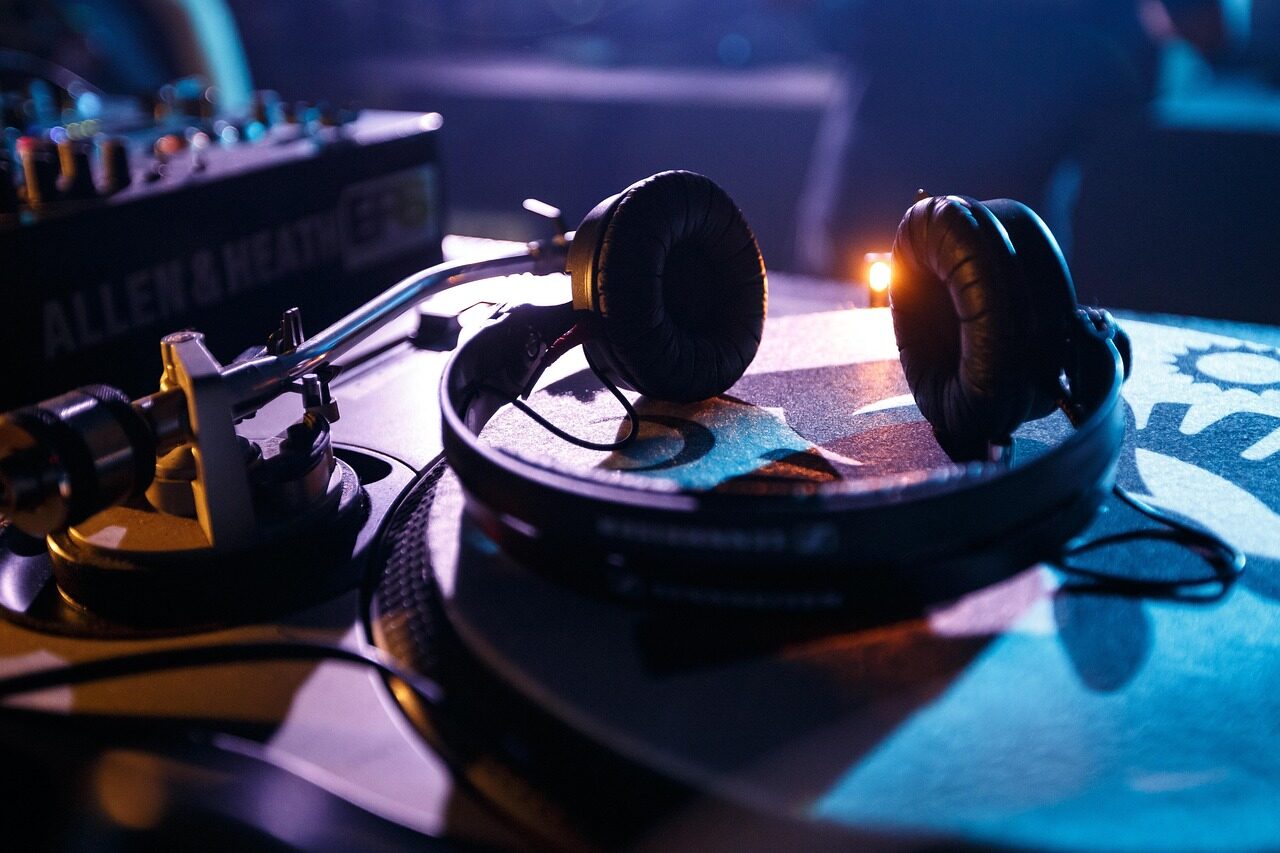
THE DROP · From the crate: The Eight-Hour Mix: Why Marathon Sets Are Quietly Taking Over Streaming · Photo: Gigxels / Pixabay
The rules of the room
Etiquette is strict, and visitors learn it fast:
- Phones go face down, and photographs of the system are usually forbidden
- Conversation is allowed, but only in low voices between tracks
- Requests are not taken. You may ask what is playing
- A drink is ¥900 to ¥1,400 and there is often a ‘seat charge’ of around ¥500
That last point matters. Bars survive on a few dozen covers a night, and most have no door staff or promoter. One owner told us her monthly costs are roughly ¥680,000, and that a good Friday can cover a quarter of that.
What flows back into the clubs
The scene’s influence is visible on dance floors. Several young Osaka producers, among them the duo Tsuyu Kazemai and a solo artist who goes by Kohaku Veyl, say they make records specifically with these rooms in mind: longer intros, more space, fewer drops. Their releases have found an audience abroad, particularly in northern Europe, where DJs have started to seek out the quieter, more spacious end of the genre.
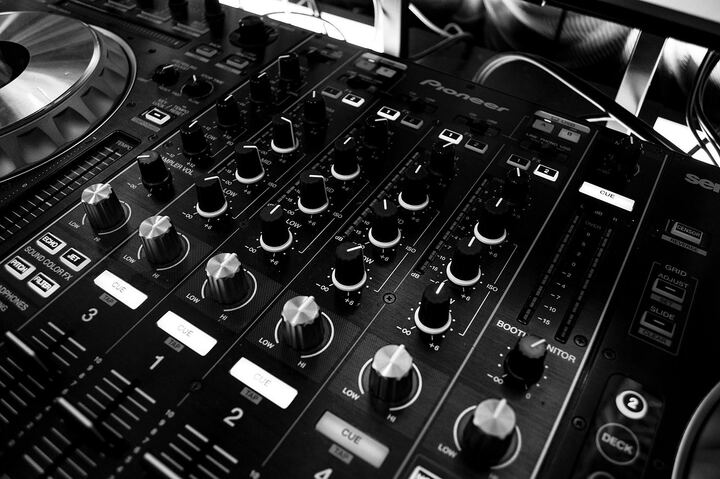
From the crate: Six Months With the Raknes DM-4: A Mixer That Argues With You · Photo: Pexels / Pixabay
The owner-selectors are also reshaping the record market. Takagawa buys about 40 records a month, almost all used, and a handful of dealers in Osaka now stock specifically for the bars. Prices for certain 1990s Chicago and Detroit pressings have climbed steeply; one dealer estimates a 30 per cent rise in two years.
The risks
Not everyone is optimistic. Maebashi worries that the scene is turning into a tourist circuit. Two of the more famous rooms now have queues on weekends, mostly foreign visitors with cameras, and one owner has quietly begun turning away groups of more than three. ‘A room like this lasts only while it stays small,’ he says. ‘If it becomes a destination, it becomes a show.’
There is also the matter of ageing owners. Several of the founding generation are in their sixties, with no successors and no plans to hand over the amplifiers. When they stop, the rooms will probably close with them.
Back at Hollow Dial, the record finishes. Takagawa lifts the needle, wipes the vinyl with a cloth and slides it into a sleeve. Nobody speaks for a moment. Then someone asks what it was, and she turns the sleeve around so everyone can see.
Ayumi writes about emerging scenes, listening spaces and the DJs shaping them, having started out in zine publishing and record-shop culture. She is based in Osaka.
Every track by Ayumi →

Conversation (…)