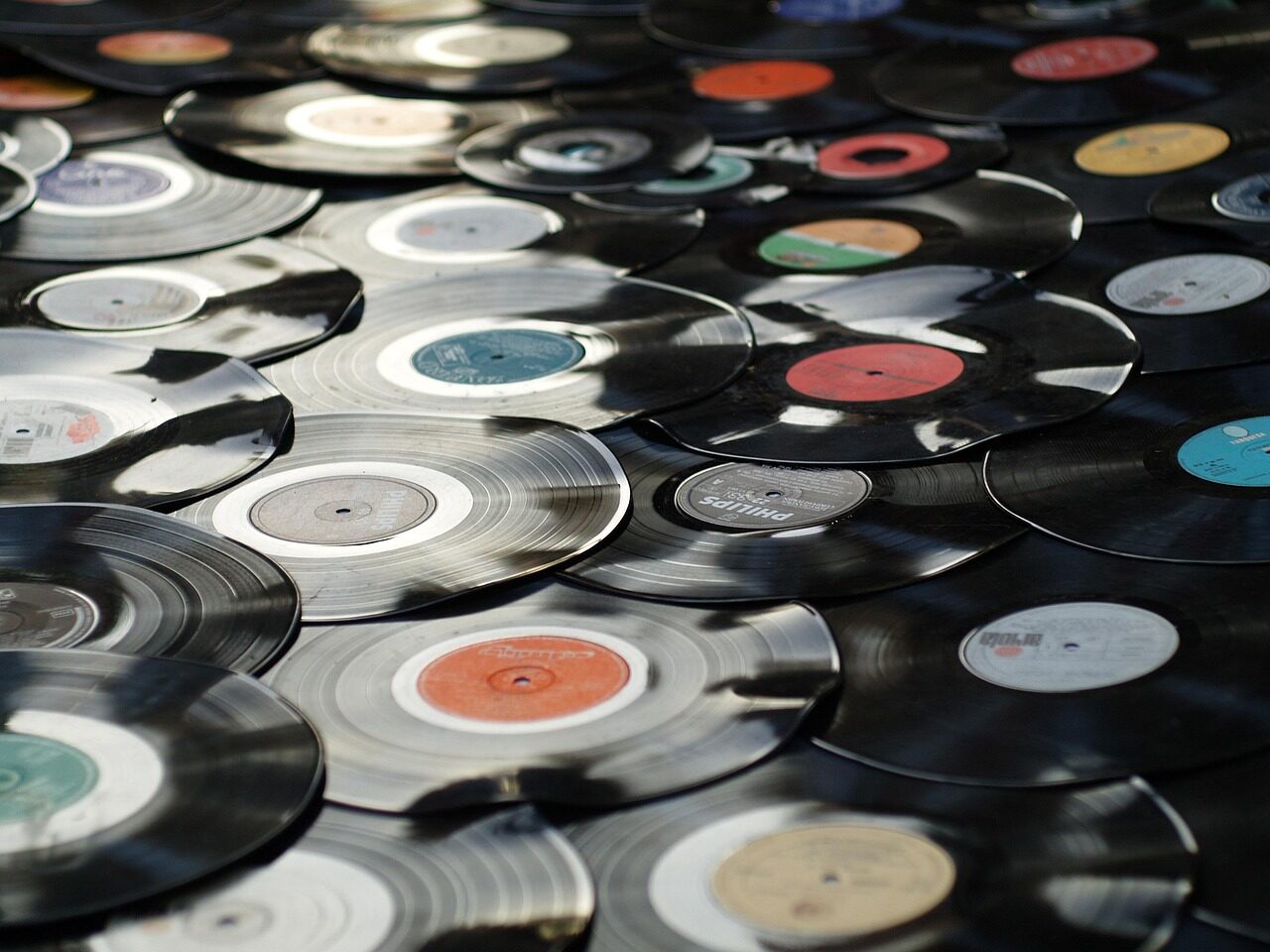
Photo: tiburi / Pixabay
‘We Press 300 Copies and Then We Stop’: Inside Skellerby Row’s Anti-Growth Label Model
Mirela Dunstan runs a Bristol imprint that caps every release at 300 vinyl and refuses to repress. She explains why scarcity pays the bills, and why she thinks it can’t scale.
Skellerby Row has released 41 records since 2018, every one of them capped at 300 copies. There are no repressings, no deluxe editions and no streaming exclusives. Its catalogue ranges from fogged-up ambient to rickety electro, and a clean copy of its second release recently changed hands for £340. We met its founder, Mirela Dunstan, in the cramped packing room above a Bristol bike shop, where the boxes of the 42nd record were waiting for tape.
The rule
Why 300?
It was the number I could afford the first time. I had £2,100 from a redundancy payment, and a pressing plant quoted me about £5.80 a unit for a short run with a printed sleeve. Three hundred was what the money allowed. The cap turned into a philosophy afterwards, which is a very nice way of describing poverty.
But you’ve kept it even though you could clearly sell more.
The thing I learned is that I could sell more, but I’d sell them differently. When something sells out in nine days, people pay attention. When it sits for a year, they don’t. Scarcity does a lot of the marketing for me. If I pressed 1,000, I’d need a distributor, a publicist, a warehouse. The whole machine arrives.
What does a typical release earn?
A 300 run at £17 retail, minus the plant, the artwork, the postage materials and the shop’s cut, leaves me with about £1,900 profit if it sells through. The artist gets half. So a typical release might earn each of us £950 across a year or so. Nobody’s buying a house. But it’s reliable, and nobody owes anybody anything.
What the cap does to the music
Do artists behave differently knowing there’s a ceiling?
Completely. They send me stranger things. Nobody’s trying to hit a playlist. One producer, Anselm Paddock, sent me a record of nothing but detuned organ and a drum machine running slightly out of time. He said he’d never have sent it to a bigger label. It’s one of our best sellers.
Doesn’t it also lock out newer listeners? A £17 record you can’t find.
That’s the fair criticism. I don’t pretend it isn’t. Everything goes on the streaming platforms after four months, and I put full-length previews on the site. But the physical object is the thing I’m actually selling, and I accept it’s a closed circle. I’d rather admit that than pretend it’s a movement.

THE DROP · From the crate: The Eight-Hour Mix: Why Marathon Sets Are Quietly Taking Over Streaming · Photo: Gigxels / Pixabay
‘Scarcity does a lot of the marketing for me. If I pressed 1,000, I’d need a distributor, a publicist, a warehouse. The whole machine arrives.’
The resale problem
Your second release is changing hands for £340. Do you see any of that?
No, and it makes me furious. Some people buy five copies the minute a record drops and list them at triple. I now limit it to two per customer and I cancel orders that look like flippers, which has cost me a few friends. Last spring I cancelled 38 orders in a day. The email I got called me ‘a gatekeeper’, which seems odd from someone trying to get rich on my back.

From the crate: Six Months With the Raknes DM-4: A Mixer That Argues With You · Photo: Pexels / Pixabay
Could you press more and kill the market?
I’ve thought about it. But the minute I repress, the promise is broken for the 300 who bought in. The cap is a promise. I’d sooner lose the money.
Where it ends
Is this sustainable? You’ve said you work another job.
Three days a week, in a print shop. That’s the real subsidy. Skellerby Row costs me about £6,000 a year to run, pays itself back, and I could not live on it. If I wanted to, I’d have to grow, and growth is exactly what I started this to avoid.
So what’s the future?
I’m going to keep doing this until it stops being fun. There’s a release in January from a Faroese trio called Havskor Ventry. It’s quietly extraordinary. It’ll sell out in a fortnight, I expect, and I’ll feel guilty about the people who miss it.
And if it doesn’t sell out?
Then I’ll have 80 copies in my spare room and a lovely record. I’ve survived worse.
The 42nd record, a set of looping, dripping synth pieces by a Leicester artist, goes on sale 4 December. Dunstan expects to hear from the flippers by lunchtime.
Marco tracks the business of music, from label economics to festival finances, after a decade in financial journalism. He works out of Milan.
Every track by Marco →

Conversation (…)