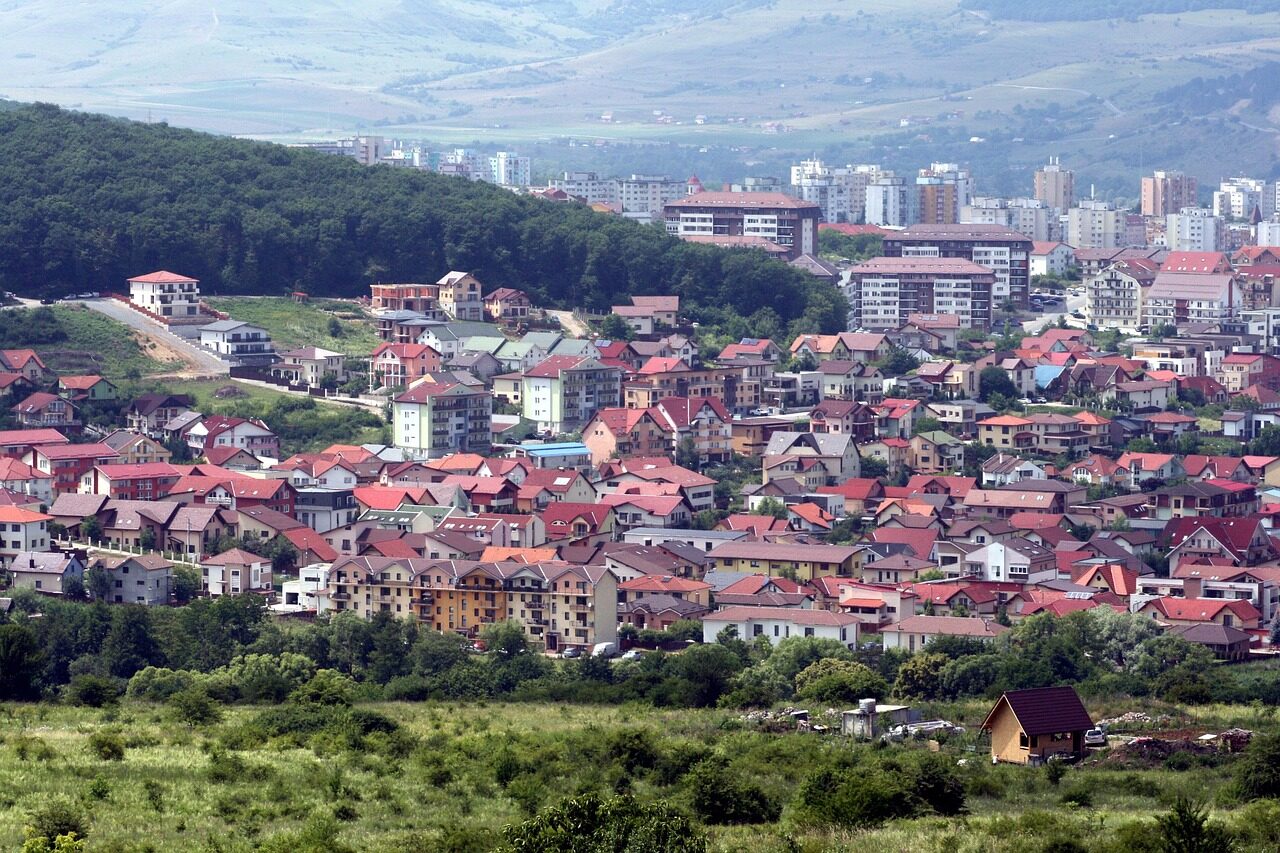
Photo: GhitaB27 / Pixabay
Cluj-Napoca After the Minimal Boom: A Scene That Learned to Stay Small
Romania’s western university city gave the world a decade of tight, hypnotic club music. Now a younger generation is rebuilding it on cheaper rents, shared sound systems and a stubborn refusal to go viral.
The tram stops running at 11:40pm in Cluj-Napoca, so everyone walks. They walk past the Baroque facades of Piata Unirii, over the Somes river and up a hill towards the Grigorescu district, where a former dairy cooperative has been turned, with more optimism than money, into a 300-person room called Lapte. It’s a Friday in mid-November, minus two degrees, and at 1am the queue is long and cheerful and wearing three layers.
Inside, a man in a woollen hat is playing a four-minute loop that seems to contain, at most, six sounds. A kick, a clipped hat, a resonant tick like a ruler on a desk. The room moves as one animal. Nobody is filming it.
The inheritance
Romanian minimal has been a fixture of European dance floors for twenty years, and Cluj, a city of about 320,000 with six universities, was one of its quieter cradles. The sound, spare and swung and obsessed with microscopic shifts in rhythm, grew up in cramped apartments and rented basements, and was later exported to Berlin, Barcelona and Ibiza by a generation that left for better money.
Many didn’t come back. By the mid-2010s, the local scene had thinned. Prominent clubs closed or became bars. Rents in the centre climbed roughly 60 per cent between 2016 and 2023, according to figures cited by a local property association, and young people who might have thrown parties found themselves working two jobs.
“We had a hangover,” says Anastasia Bolboceanu, 31, who co-runs a collective called Tipar. “Everyone knew the sound was great, and everyone also knew the scene had been emptied out. We thought, either we leave too, or we make it a place you can actually live in.”
Building cheap
Tipar’s answer, and that of several similar crews, was to stop chasing the centre. They rented unglamorous spaces in the outskirts: a dairy, a print workshop, a former bakery with working ovens. They agreed to share equipment rather than compete over it. The city now has a pooled system of speakers, owned jointly by five collectives and rented out to each of them for a small fee that funds repairs.
The maths, though modest, has held. Lapte’s rent is 1,800 euros a month, about a third of what a comparable space in the centre would cost. Entry rarely exceeds 40 lei, around 8 euros. Most nights break even by 2am, and the surplus is shared between artists and a small reserve fund.
THE DROP · From the crate: The Eight-Hour Mix: Why Marathon Sets Are Quietly Taking Over Streaming · Photo: Gigxels / Pixabay
“We don’t want to be the next Berlin. We’d like to be the first Cluj that’s allowed to be boring.”
The sound has shifted
The music isn’t a museum piece. Where classic Romanian minimal leaned on clipped, dry percussion, the newer producers have thickened it. Bass lines come from modular rigs and hacked tape machines. Vocals, often folk fragments recorded on phones in grandparents’ villages in Maramures, drift through at the edge of hearing. Producer Tudor Nistoroiu, 27, makes what he calls “shepherd minimal,” built around a looped sample of a 1970s wooden flute.
“It’s not a gimmick,” he says. “I grew up with that sound in the background. It lives in the same register as the music I make. Same restraint, same patience.”
His latest record, pressed in an edition of 250 at a plant in Czechia, sold out in nine days, mostly to buyers in Japan, Germany and the Netherlands.
From the crate: Six Months With the Raknes DM-4: A Mixer That Argues With You · Photo: Pexels / Pixabay
The risks of attention
The scene isn’t without strain. Local promoters worry about visiting DJs who inflate fees and then leave. Residents of one apartment block near Lapte have lodged noise complaints, and the municipality has hinted at stricter closing times. A planned festival on the edge of the city, backed by a larger investor, has divided opinion: some see opportunity, others a trap.
There’s also the matter of retention. Cluj’s universities pour thousands of graduates into the economy every year, and many of them leave for Bucharest, London or Amsterdam, where salaries are better. Bolboceanu says the collective tries to keep people with something unquantifiable.
“If you spend your Fridays here, you’ve got friends who’ll help you move,” she says. “That’s not a business model, but it’s why people stay.”
Staying small
At 3:30am, Lapte is still packed. The man in the woollen hat has been replaced by a woman who plays a single extended track built around a stuttering vocal clip, tweaking a filter by a few degrees every minute or so. Someone near the bar is making tea in a kettle on a camping stove, and handing out paper cups.
Outside, the snow has started. The tram won’t run for another two hours. Nobody seems to mind.
Freja covers club culture and nightlife policy, with a background in local radio and city-council reporting. She is based in Stockholm.
Every track by Freja →

Conversation (…)