Photo: jurikivit / Pixabay
Tallinn After Dark: Where Winter Is the Scene’s Whole Personality
With sunset at 3:15pm and a six-month cold season, Estonia’s capital has built a club culture around darkness, saunas and long, slow nights. It’s one of Europe’s most distinctive scenes.
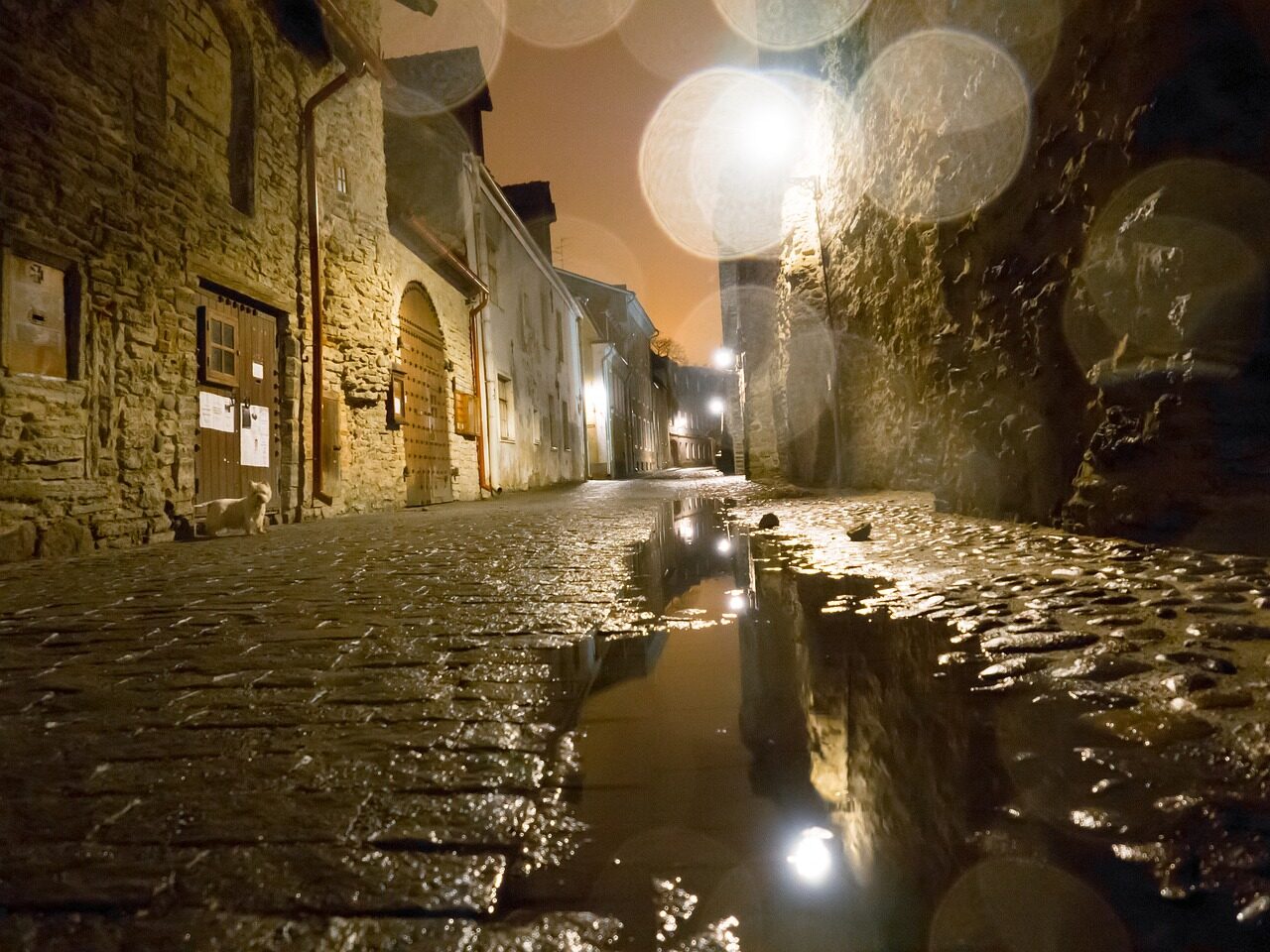
At half past three on a Saturday in late November, Tallinn has already gone dark. The old town glows orange under a thin dusting of snow, trams hiss along Narva maantee, and outside a former rubber factory in Kopli a queue is forming. It is minus six degrees. Nobody is complaining. Inside, a sub-bass note is travelling through the floor, and the night, in the local sense, has begun.
Estonia’s capital is a city of around 450,000, and its club scene is not large. But it has something that bigger scenes lack: a coherent personality, shaped by climate, geography and an unusual relationship with the dark.
The long night as infrastructure
From November to February, Tallinn gets under seven hours of daylight at its worst. Promoters have adapted by starting earlier. The city’s most talked-about weekly, a Saturday called Pimedus (“darkness”), opens its doors at 4pm and closes at midnight, drawing a crowd that is as likely to include a retired engineer as a student.
“We figured out that nobody wants to go out at midnight in January,” says Ragnhild Kolsrud-Nwabude, who co-founded Pimedus in 2022. “It’s brutal. You trudge home at 3am in the dark and ice. So we gave people the dark at four in the afternoon, and they get home when it’s still evening.” Average attendance this autumn has been around 380, in a room licensed for 450.
The early start has had a quiet side-effect: older ticket-buyers. About a third of the Pimedus crowd, by the organisers’ count, is over thirty-five. That is rare in electronic music, and it gives the room a settled, unpressured feel.
Sauna culture meets the dancefloor
It would be a cliché to say Estonians love saunas, except that it is simply true: the country has roughly one sauna for every two households. Several clubs have installed them. At Lõhn, a venue in the Telliskivi creative district, a wood-fired sauna sits next to the dance floor, and patrons dip between the two across the night.
The effect on the music is subtle but real. DJs tend towards slower tempos, around 118 to 125 BPM, with a bias for dub-inflected house, ambient-leaning techno and the occasional Estonian folk sample. “You can’t play 140 when half the room is wrapped in a towel,” says Lõhn’s resident Oskar Veidenbaum-Lee, with a grin. “So you play deeper. You wait.”

THE DROP · From the crate: The Eight-Hour Mix: Why Marathon Sets Are Quietly Taking Over Streaming · Photo: Gigxels / Pixabay
Tallinn doesn’t do peak-time. It does a long, warm middle.
A small, connected ecosystem
The city’s scene is compact enough that everyone knows everyone. There are perhaps fifteen venues worth the name, a handful of labels, and two community radio stations that stream sets from the clubs. A young producer can play an opening slot on Thursday, appear on air Friday, and have a track on a local label’s compilation by Christmas.
Public support helps. Tallinn’s culture department funds a small grant scheme, with awards of up to €6,000, that has supported six club-related projects since 2024, including a mobile sound system that tours Estonia’s island towns. The money is modest by Western European standards, but it arrives with little paperwork.
The city also benefits from its geography. Flights from Helsinki take twenty-five minutes, and the ferry takes two hours. Finnish clubbers cross the Gulf in numbers; in summer, they are a visible part of the crowd, drawn by lower prices. A beer at a Tallinn club costs roughly €4, about half of what it would in Helsinki.

From the crate: Six Months With the Raknes DM-4: A Mixer That Argues With You · Photo: Pexels / Pixabay
The risks
The scene is fragile in the usual ways. Rents in Telliskivi have risen about 40 percent in three years as the district gentrifies. Two venues have already closed. A third, a basement near the railway station, is rumoured to be on the market.
There is also a talent drain. Young producers who find an audience at home are often tempted by Berlin or London. “It’s a pity,” says Kolsrud-Nwabude. “But some come back. They bring different ideas, and they want to be part of something small and real.”
What Tallinn offers, finally, is a refusal to chase scale. It is a scene built for the cold: warm in the middle, patient, unhurried. At eleven that Saturday, as the last dancers collect their coats and step out into the snow, the sky is still black, the street is silent, and the city feels, for a moment, like it belongs to them.
Ayumi writes about emerging scenes, listening spaces and the DJs shaping them, having started out in zine publishing and record-shop culture. She is based in Osaka.
Every track by Ayumi →

Conversation (…)