Photo: Leonhard_Niederwimmer / Pixabay
The Festival You Can Only Reach by Train: Inside Hallgrund’s Rail-Only Experiment
A new Austrian festival in the Salzkammergut sold 6,000 tickets with no car parking and no shuttle buses. Organisers say the timetable became part of the lineup.
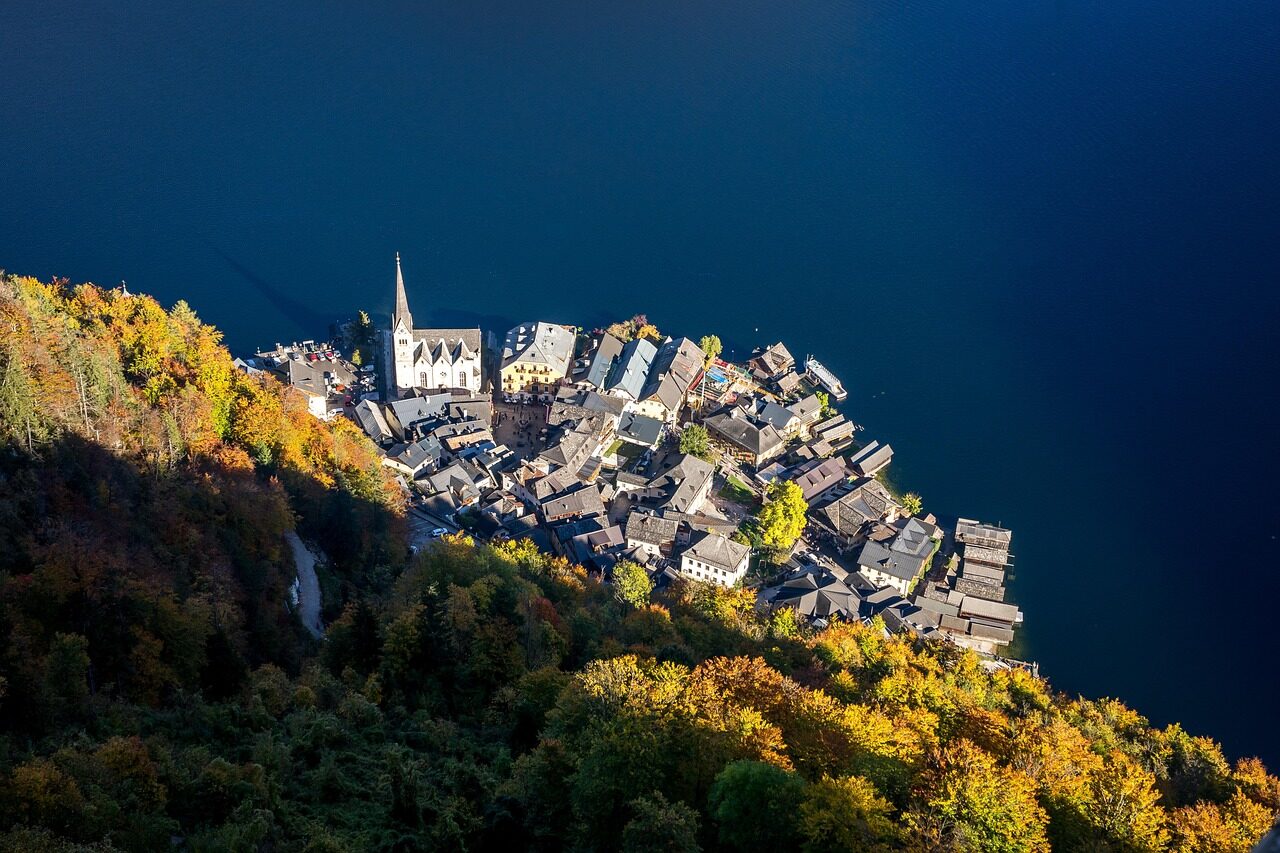
The first thing arrivals at Hallgrund noticed this August was the silence of the car park. There wasn’t one. The festival, held on a lakeside meadow in Austria’s Salzkammergut region, sold 6,000 tickets for a three-day weekend, and every one of them came bundled with a rail pass. No parking, no shuttle buses, and no exceptions for headliners, who were also asked to arrive by train.
After a first year that organisers describe as “nearly chaotic, in a good way,” the experiment is being watched closely across a continent where festival transport is quietly becoming the largest single line in the carbon ledger.
The transport problem nobody wants to look at
For most outdoor festivals, getting people there is the dominant source of emissions. Industry estimates commonly attribute well over half of a festival’s carbon footprint to audience travel, and for events in rural locations the share can be higher. Sound systems and generators draw the criticism, but they are small by comparison.
Hallgrund’s founders, a partnership between a Salzburg promoter and a regional rail operator, set out to remove the biggest variable. “We asked: what if the festival did not exist at the end of a road?” says Konrad Sallowby-Torrisi, the event’s director. “What if the station was the entrance?”
The nearest station, Hallgrund-Seewiese, is a request halt on a branch line that had seen three trains a day. For the festival weekend, the rail operator ran 28 services daily, including late-night returns, with direct connections from Vienna, Munich and Salzburg.
What it cost, and who paid
The numbers are revealing. The extra rail capacity cost roughly €410,000 over the weekend. The festival absorbed about €260,000 through the bundled ticket, which was priced at €189 for the full weekend including transport from any station in Austria. The remainder came from a regional tourism subsidy, which is conditional on the event meeting a modal-share target: at least 90 percent of attendees must arrive by rail.
The actual figure was 94 percent. The remaining six percent were local residents who walked or cycled, plus crew.
For comparison, a typical festival of this size would spend perhaps €120,000 on parking operations and shuttle contracts. So the true marginal cost of going rail-only was about €290,000, which is not trivial, but it is not prohibitive either. Sallowby-Torrisi says it was partly offset by savings on land rental, since the meadow no longer needed to be a car park.
THE DROP · From the crate: The Eight-Hour Mix: Why Marathon Sets Are Quietly Taking Over Streaming · Photo: Gigxels / Pixabay
The timetable as programming
What surprised the team most was how the trains shaped the event. Because the last service back to Vienna left at 2:40am, sets were scheduled to finish by 2:15. The main stage’s closing slot, which usually belongs to a headliner at peak intensity, became a more reflective slot, and the programmers leaned into it, booking ambient and downtempo acts.
“The last train became our curfew, and the curfew became our curation.”
Attendees also arrived in waves rather than a single Friday afternoon crush. Because of the way services were spaced, the site filled gradually across eight hours, which smoothed queues at the gate. The festival reported an average wait of four minutes to enter, against the half-hour or more common elsewhere.
From the crate: Six Months With the Raknes DM-4: A Mixer That Argues With You · Photo: Pexels / Pixabay
There were rough patches. A signal fault on Saturday evening delayed one service by 55 minutes and left several hundred people stranded at Salzburg. Luggage was an issue, with campers hauling tents on crowded carriages. The festival has since arranged a luggage-forwarding service, priced at €25.
Will it travel?
The model is not for everyone. It depends on a venue near a rail line, a cooperative operator, and public money. Many UK or Spanish festivals, set in fields miles from a station, would find it impossible.
But the logic is spreading. Two other events have contacted Hallgrund’s team about copying the template, and a Swiss promoter is exploring a similar format in the Engadin valley for 2028.
The next edition is already scheduled for August 2027, with capacity raised to 8,500. If the numbers hold, it may offer a model for the part of the festival industry that still has the means, and the track, to change how it gets its audience in the gate.
Kwesi reviews studio and DJ hardware and explains production techniques, drawing on years as a mix engineer and sound-design tutor. He is based in Manchester.
Every track by Kwesi →
Conversation (…)